
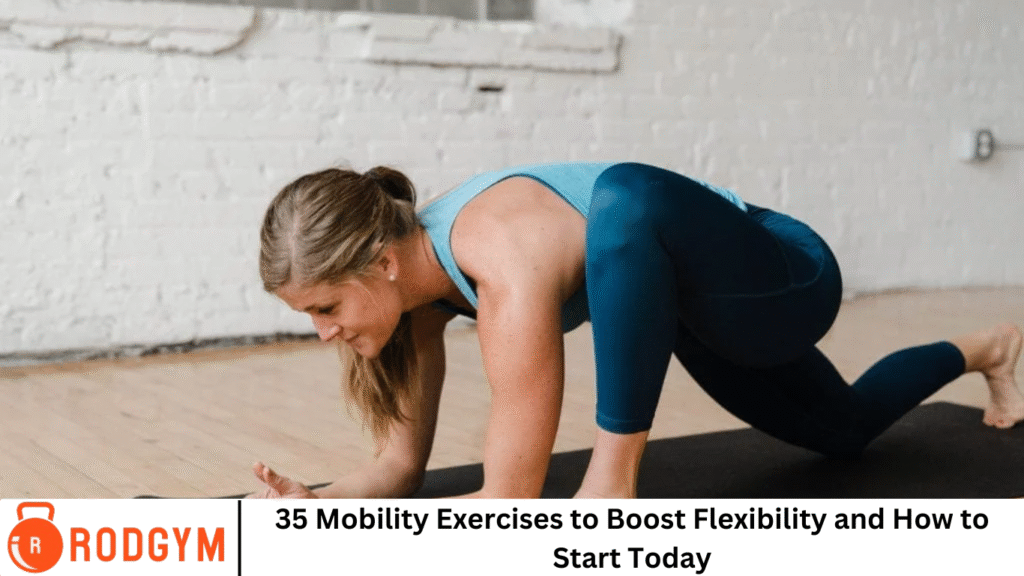
Fast-paced world, maintaining flexibility and mobility is essential for overall health and performance. Whether you’re an athlete, a desk worker, or just someone looking to feel better in your body, mobility exercises can dramatically improve your posture, reduce pain, prevent injuries, and enhance your range of motion.
This guide will walk you through 35 effective mobility exercises that can be easily incorporated into your daily routine. Plus, we’ll show you how to get started with a beginner-friendly plan.
More Read: Master Your Push-Ups: 8 Form-Fixing Tips
What is Mobility and Why Does It Matter?
Mobility is the ability of your joints to move freely through their full range of motion. It combines flexibility (the length of your muscles) with strength and control.
Good mobility ensures your body moves efficiently and safely during everyday activities and workouts. Poor mobility can lead to tight muscles, joint stiffness, poor posture, and even injuries.
Benefits of Mobility Exercises:
- Enhanced flexibility and joint health
- Better posture and alignment
- Improved athletic performance
- Reduced risk of injuries
- Less pain and stiffness
- Faster recovery after workouts
How to Get Started with Mobility Training
Before jumping into exercises, here are some tips for success:
- Start Slow: Begin with 5-10 minutes a day.
- Be Consistent: Aim for 3-5 times per week.
- Focus on Quality: Move with control and intention.
- Breathe: Deep breathing helps release muscle tension.
- Warm Up First: Light cardio like walking or jumping jacks can help prep your body.
35 Mobility Exercises to Boost Flexibility
Neck & Shoulders
- Neck Circles: Gently rotate your head in a circular motion to loosen neck muscles.
- Chin Tucks: Sit or stand tall and gently tuck your chin towards your chest.
- Shoulder Rolls: Roll your shoulders forward and backward to increase mobility.
- Wall Angels: Stand against a wall and move your arms up and down like a snow angel.
- Thread the Needle: A yoga pose that stretches the upper back and shoulders.
Upper Back & Thoracic Spine
- Cat-Cow Stretch: A spinal movement that increases flexibility and awareness.
- Thoracic Rotations: Kneel on all fours and rotate your upper back side to side.
- Wall Rotations: Stand sideways against a wall and rotate your upper body.
- Child’s Pose: A gentle yoga stretch for the spine and back muscles.
- Foam Roller Extensions: Lay back on a foam roller and arch over it to open the thoracic spine.
Hips & Glutes
- Hip Circles: Stand on one leg and rotate the opposite leg in circles.
- World’s Greatest Stretch: Combines hip, hamstring, and thoracic mobility.
- 90/90 Stretch: Sit with one leg in front and one leg to the side at 90 degrees.
- Pigeon Pose: Opens up tight hip flexors and glutes.
- Lunge with Twist: Lunge forward and twist toward the front leg.
Hamstrings & Quads
- Standing Toe Touch: Reach down slowly toward your toes.
- Dynamic Leg Swings: Swing your leg forward and backward.
- Quad Stretch: Pull one foot behind you while standing.
- Hamstring Scoops: Walk forward scooping your front leg.
- Downward Dog: A classic yoga pose to stretch hamstrings and calves.
Ankles & Feet
- Ankle Circles: Rotate each foot in slow circles.
- Toe Raises: Lift your toes while keeping your heels on the floor.
- Heel Walks: Walk on your heels to activate ankle stabilizers.
- Kneeling Ankle Rock: Kneel and rock forward over your ankle to improve dorsiflexion.
- Resistance Band Ankle Stretch: Use a band to stretch the ankle joint.
Full Body & Functional Movements
- Inchworms: Walk your hands out to a plank and back.
- Bodyweight Squats: Focus on full depth and proper form.
- Spiderman Stretch: Similar to World’s Greatest Stretch, with an added elbow drop.
- Bear Crawls: Engages the whole body and enhances coordination.
- Cossack Squats: Side-to-side dep squats to open the hips.
Bonus Exercises for Recovery and Relaxation
- Foam Rolling (Various Muscles): Helps release fascia and improve mobility.
- Massage Ball Work: Target small muscle groups like feet or glutes.
- Breathing Drills: Diaphragmatic breathing can improve posture and core control.
- Yoga Flow (Sun Salutations): Combines multiple mobility exercises in a fluid sequence.
- Guided Stretching Apps or Videos: Great for structure and accountability.
Creating a Simple Mobility Routine
Here’s a sample beginner-friendly routine (10-15 minutes):
- Warm-up (2 mins): March in place or jumping jacks.
- Neck Circles (30 secs)
- Shoulder Rolls (30 secs)
- Cat-Cow Stretch (1 min)
- World’s Greatest Stretch (1 min each side)
- 90/90 Stretch (1 min each side)
- Dynamic Leg Swings (1 min each leg)
- Ankle Circles (30 secs per foot)
- Foam Rolling (Optional – 2 mins)
Repeat 3-4 times per week for best results.
Tips to Stay Consistent
- Set a reminder or calendar event.
- Track your progress with a journal.
- Pair mobility work with your workout routine.
- Use apps like ROMWOD, GOWOD, or YouTube videos for guidance.
- Celebrate small wins (e.g., touching your toes again).
Frequently Asked Question
What are mobility exercises and how do they differ from stretching?
Mobility exercises focus on improving the range of motion in your joints through active movement, while stretching typically targets the lengthening of muscles. Mobility combines flexibility with strength and control to improve functional movement.
How often should I do mobility exercises to see results?
For noticeable improvements in flexibility and joint function, aim to perform mobility exercises 3 to 5 times per week, even if only for 10–15 minutes per session. Consistency is more important than duration.
Can beginners do these 35 mobility exercises?
Yes, these exercises are beginner-friendly. Many can be modified to suit all fitness levels. Starting with a simple routine of 5–10 exercises a day is a great way to build consistency and avoid overwhelm.
Do I need any equipment for these mobility exercises?
Most of the 35 mobility exercises require no equipment at all. A few may benefit from tools like a foam roller or resistance band, but these are optional and not essential for getting started.
How long does it take to improve flexibility through mobility work?
You can begin to notice improvements in flexibility and ease of movement in as little as 2 to 4 weeks with consistent practice. The key is daily or near-daily repetition with proper technique.
What’s the best time of day to do mobility training?
Mobility work can be done any time of day, but it’s especially effective as part of a warm-up before workouts or as a cool-down. Morning sessions can also help loosen up the body for the day ahead.
Can mobility exercises help reduce pain or stiffness?
Yes. Regular mobility training can significantly reduce joint stiffness, muscle tightness, and even chronic pain, especially in areas like the back, hips, and shoulders. It promotes better posture, circulation, and muscular balance.
Conclusion
Mobility training is a game-changer for anyone looking to improve their physical well-being. With just a few minutes a day, you can dramatically increase your flexibility, reduce pain, and enhance overall movement. These 35 exercises offer a wide range of options that target every part of the body. Start slow, stay consistent, and listen to your body. In no time, you’ll feel looser, stronger, and more capable in everything you do.
